

Growing up in Kingston as a teenager during the Great Depression, Henry ‘Hank’ Goldup helped out as an ice scraper at the old Jock Harty Arena on Arch Street during the early 1930’s. The ‘rink rats’ would get access to open ice time and play shinny mostly using borrowed equipment. Goldup didn’t have his own skates until he was gifted a pair at age 16. A few short years later Goldup was a Stanley Cup champion with the Toronto Maple Leafs.
Born in Kingston in 1918 at the end of World War 1, Hank’s mother Daisy died suddenly when he was only three and he was raised by his older sister Florence, and his father Fred.
After getting his first pair of skates Goldup joined Wally Elmer’s Kingston Junior Red Indians and as a 17-year-old led the league in scoring with 29-goals and 48-points in sixteen games during the 1935-36 season. Kingston went to the OHA Junior B semi-finals and Goldup’s season included a 5-goal game against Queen’s.
Goldup was also playing for Doc Myles Dunlop-Fort juvenile team and they qualified for the A.G. Spalding invitational tournament in Toronto. Playing at Maple Leaf Gardens, quite a thrill in itself, they beat Upper Canada College to capture the OHA Juvenile championship.
Goldup left Kingston in the fall of 1936, recruited by Toronto’s North Vocational School where they won the OHA Junior B championship in 1936-37. Boston Bruins scout Fred Hitchman saw Goldup play for the Kingston juniors and Boston boss Art Ross watched Goldup in Toronto, Ross said, “there’s a boy who is going to be a great goal scorer.”
Goldup’s NHL rights belonged to Boston, but despite the accolades from the Bruins organization they traded his rights to Toronto in a three-way deal with the New York Americans.
In 1937-38 Goldup moved up to the OHA’s Toronto Marlboros winning the OHA Junior A scoring championship with 25-goals and 41-points in just fourteen games.
As a 20-year-old he joined the Toronto Goodyears Senior A team, scored 18-goals in 16 games and helped the Goodyears win the OHA Senior A hockey title, only to lose to the Montreal Royals in the Allan Cup playoffs.
Goldup, listed at six-foot-four, 175-pounds, turned pro with the Toronto Maple Leafs in 1939. Leafs owner Conn Smythe sent Goldup to the American Hockey League’s Pittsburgh Hornets for more seasoning before making the jump to the NHL.
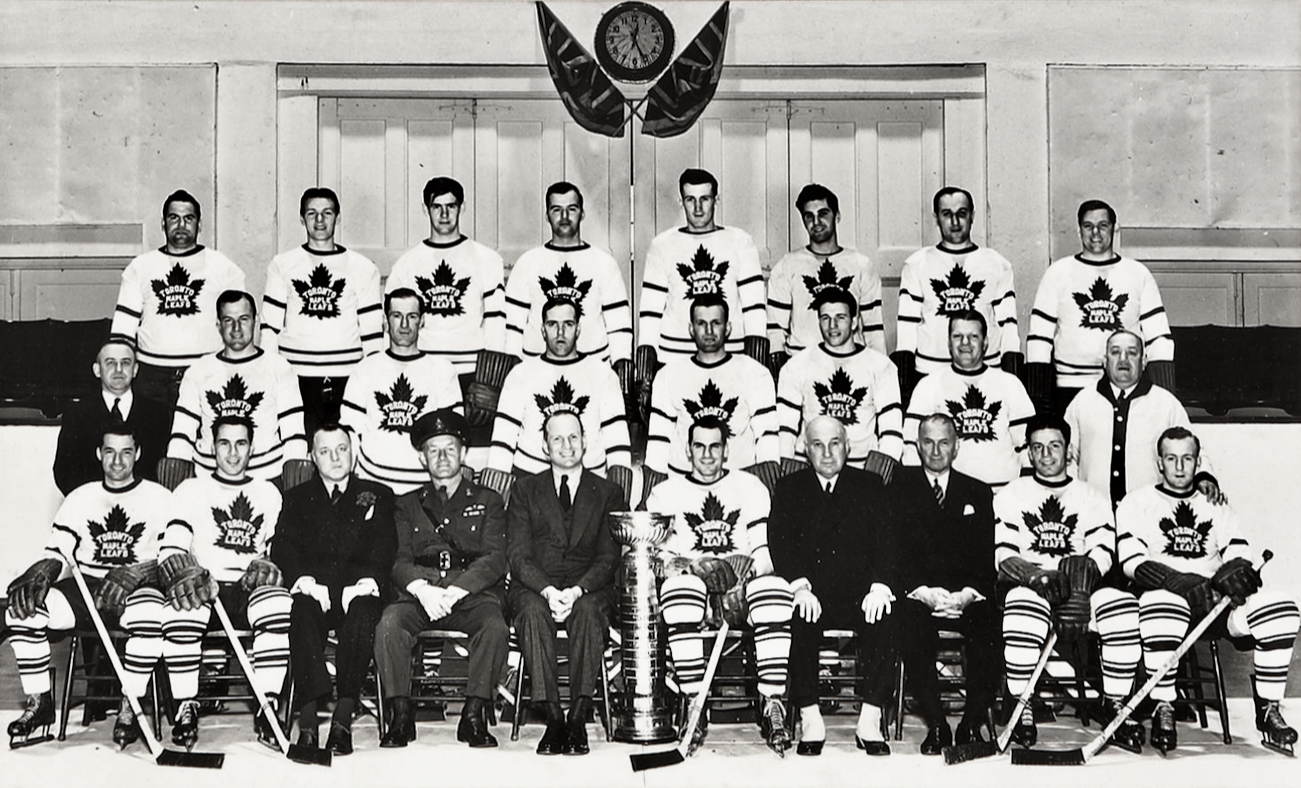
Goldup only played 17 games in the minors, scoring 12-goals and collecting 24-points he was called up by Toronto in February, 1940. As a rookie he was the leading goal scorer in the playoffs with 5 goals in 10 games (tied with teammate Syl Apps), three of Goldup’s goals were game winners cementing his reputation as a clutch player.
It was Goldup’s series winning goal against Detroit that put the Leafs into the Stanley Cup final against the New York Rangers. The Rangers won the series in six games on Bryan Hextall’s overtime goal. It would be a 54 year wait before the Rangers would win another Stanley Cup in 1994.
One of the individual highlights of Goldup’s career came during the 1940-41 season when he scored four goals for Toronto in a 6-1 win over the New York Americans. Goldup scored four consecutive Toronto goals, three in the first period, and was forced to leave the game in the third period with a sprained ankle.
“He is the great illusionist, makes Houdini look like a rookie,” said Conn Smythe, “five years ago I watched him put rubber into junior nets like he did tonight, and I was told the kid hasn’t got it.” Montreal coach Dick Irvin called Goldup, “the greatest money player to enter professional hockey in a long time.”
In 1942 the Leafs made Stanley Cup history. Goldup was part of the Leafs team that became the only team in NHL history to battle back after being down 3-games-to-nothing in the Stanley Cup finals – to beat Detroit in seven-games and win the Stanley Cup. The afterglow of being a Stanley Cup champion didn’t last long, just eight games into the following season Toronto traded Goldup to the New York Rangers for star defenceman Babe Pratt.
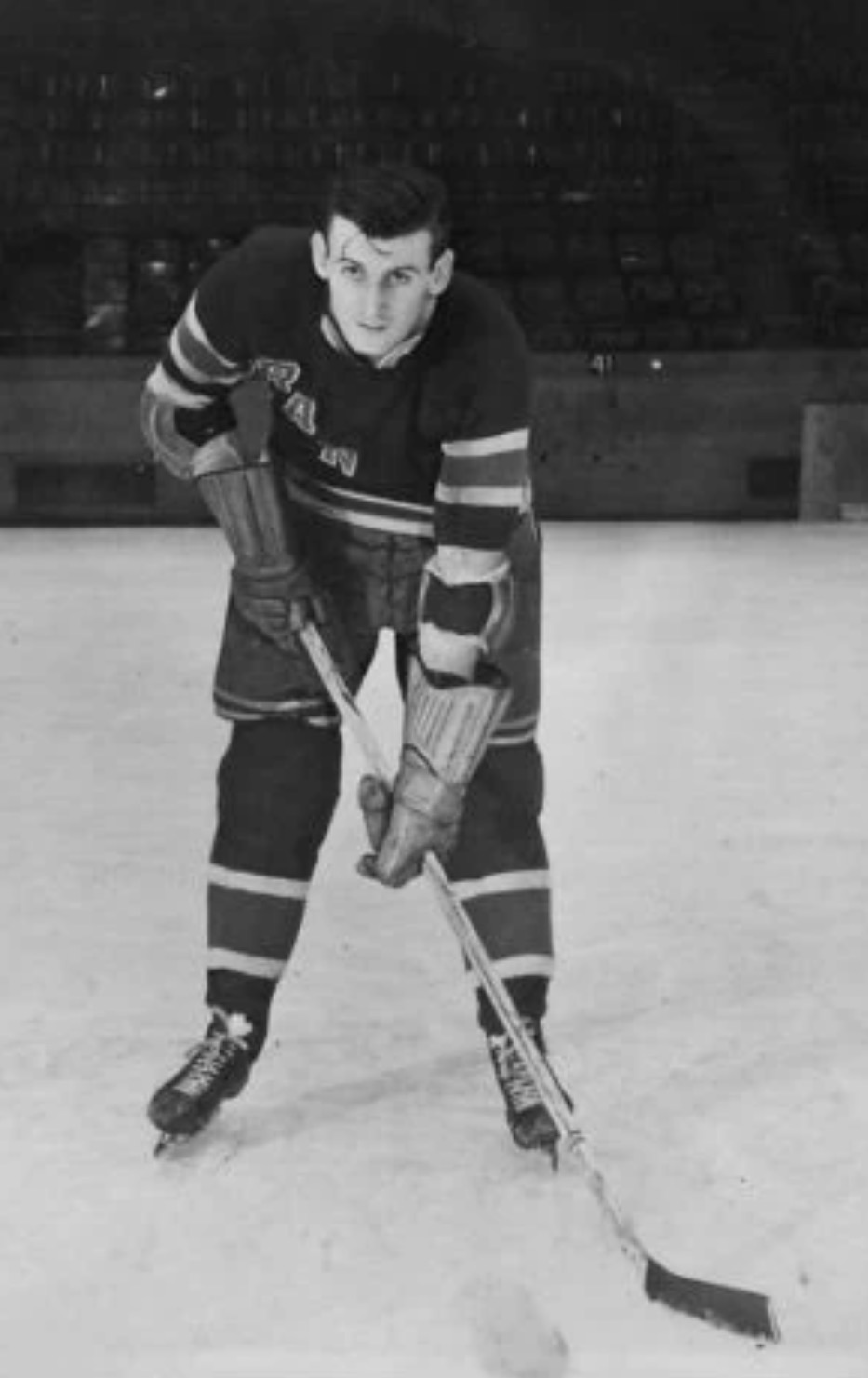
Goldup played 36 games for the Rangers that season and the following year he joined the Canadian Armed Forces in the midst of World War II, he never went overseas but he missed the entire 1943-44 NHL season. Goldup rejoined the Rangers in the fall of 1944 and played two more NHL seasons on Broadway, before finishing up his career in the American Hockey League with New Haven and Cleveland. Goldup scored 30 goals in his final season in Cleveland in 1946-47 playing for Kingston’s Fred ‘Bun’ Cook. Goldup was 28 at the time and confident he would get another shot at the NHL.
But, that summer he suffered a badly broken leg during a celebrity baseball game that effectively ended his hockey career. Goldup missed the entire next season, attempted a brief comeback in 1948 playing a handful of minor pro games before calling it quits. In six NHL seasons Goldup played 202 games, scored 63-goals and accumulated 143-points. Following his retirement as a player, Goldup returned home to Etobicoke, Ontario. For several years he was a sales rep for Molson Breweries, before taking a similar position with Jordan Wines.
While working for Molson’s the brewery introduced a new lager beer in 1959 and had an employee contest to name it. Goldup suggested the name Molson ‘Canadian’ and it became one of Canada’s most popular beers. Goldup won a new bedroom suite for naming the lager.
Hank stayed involved in hockey after his playing days ended, he was a part-time scout for the Montreal Canadiens and enjoyed success as a coach – spending 15-years coaching kids in the Toronto Minor Hockey League and teaching at hockey schools in the summer. Goldup worked at the first hockey school in Canada in Kentville, Nova Scotia that started in 1957.
The Goldup family won a Stanley Cup, a Memorial Cup and a Calder Cup. Hank won the Stanley Cup in 1942, his son Glenn, who played briefly for Montreal and spent five NHL seasons with the LA Kings in the early 1980’s, won a Memorial Cup with the Toronto Marlboros in 1973 and a Calder Cup American Hockey League championship with Montreal’s Nova Scotia farm team in 1976.
Following his hockey career Hank Goldup took up golf and became an exceptional amateur golfer, winning many amateur tournaments.
Goldup is a member of both the Etobicoke Sports Hall of Fame and Kingston & District Sports Hall of Fame. Goldup died at age 90 in 2008 and never fully recovered from a serious stroke suffered several years before his death.
Mark Potter is a longtime Kingston broadcaster and an honoured member of the Kingston & District Sports Hall of Fame.
 KTown Sports Blog