
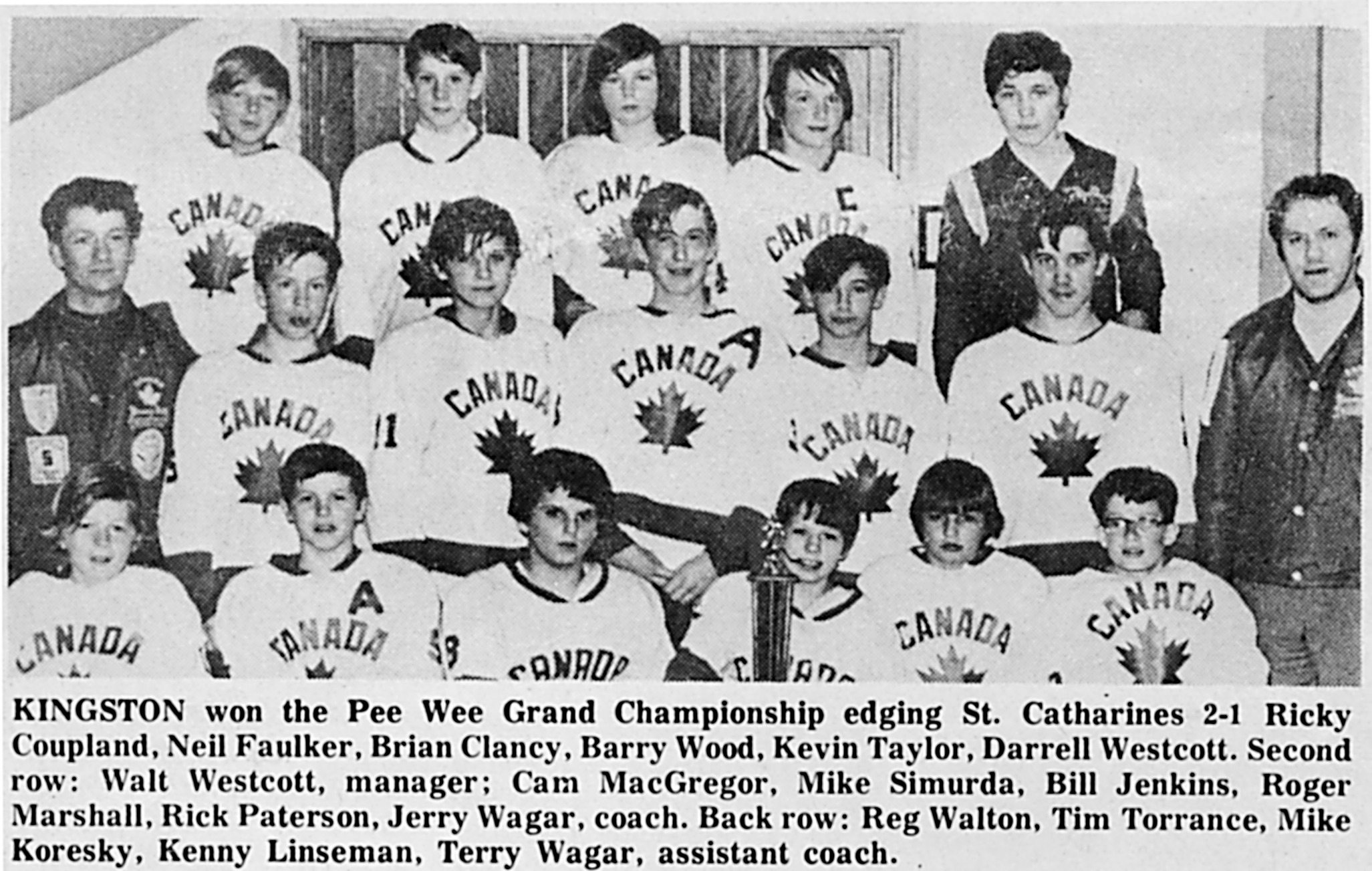
Fifty-five years ago, the Kingston Young Nats Bennett’s Foods Peewee all-star team was the best team in North America. Coached by Dr. Gerry Wagar and led by two future NHL’ers, Rick Paterson and Ken Linseman, they won the North American Silver Stick Tournament in Port Huron, Michigan in January, 1971. Paterson owns four Stanley Cup rings, but none of those teams were as dominant as the Young Nats Peewees.
It was their third year together and they had won 13 straight tournaments, going 32-and-1 during the 1970-71 season. Their only loss was a 1-0 defeat to the Toronto Red Wings, they avenged that loss the following day with a bounce back 6-3 win over the Red Wings.
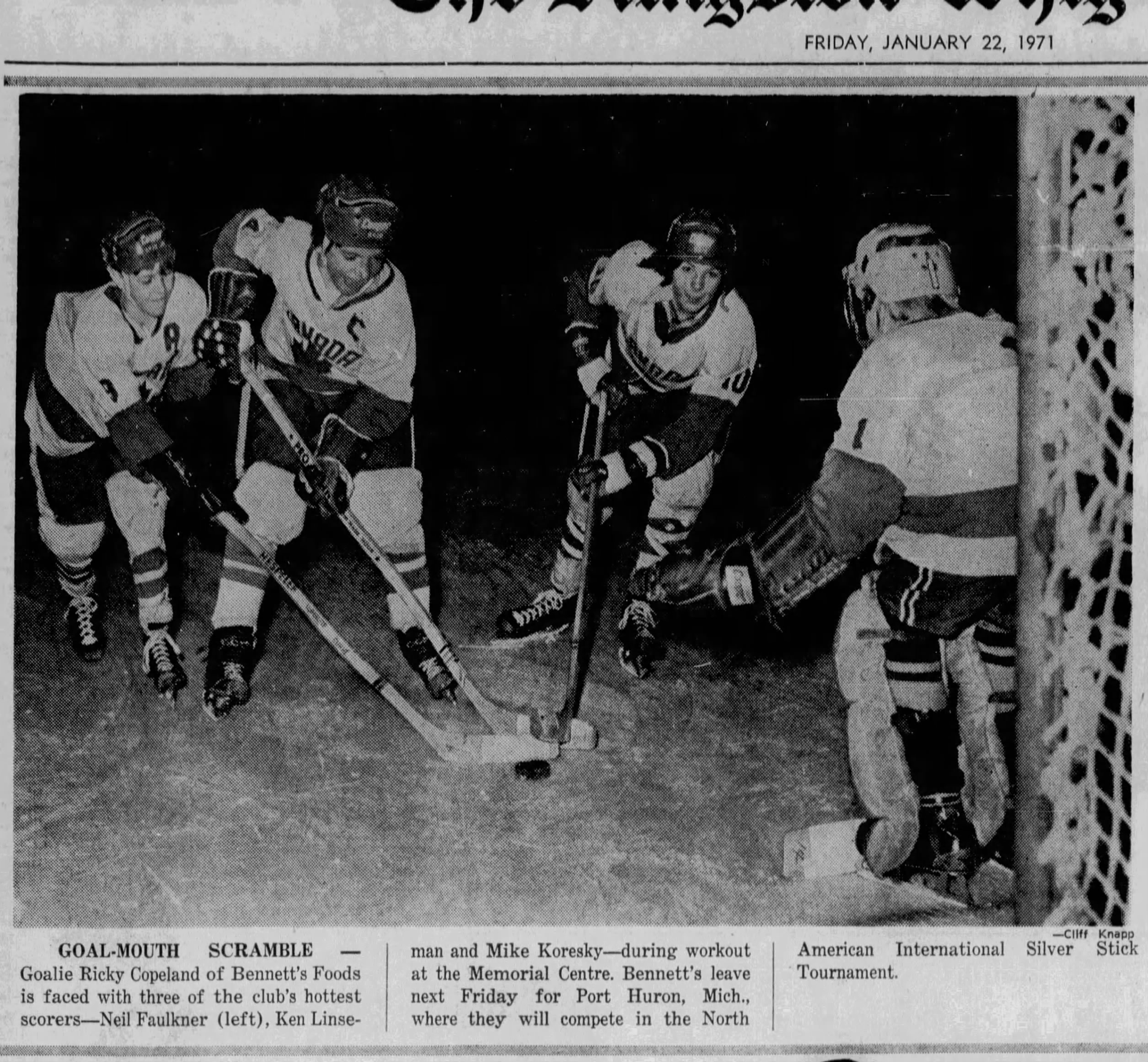
Paterson and Linseman had a great supporting cast, Rick Copeland was great in goal, Neil Faulkner, Bill Jenkins, Mike Simurda and Tim Torrance were among a group of high-quality forwards. Anyone that saw Faulkner play knows what a talent he was.
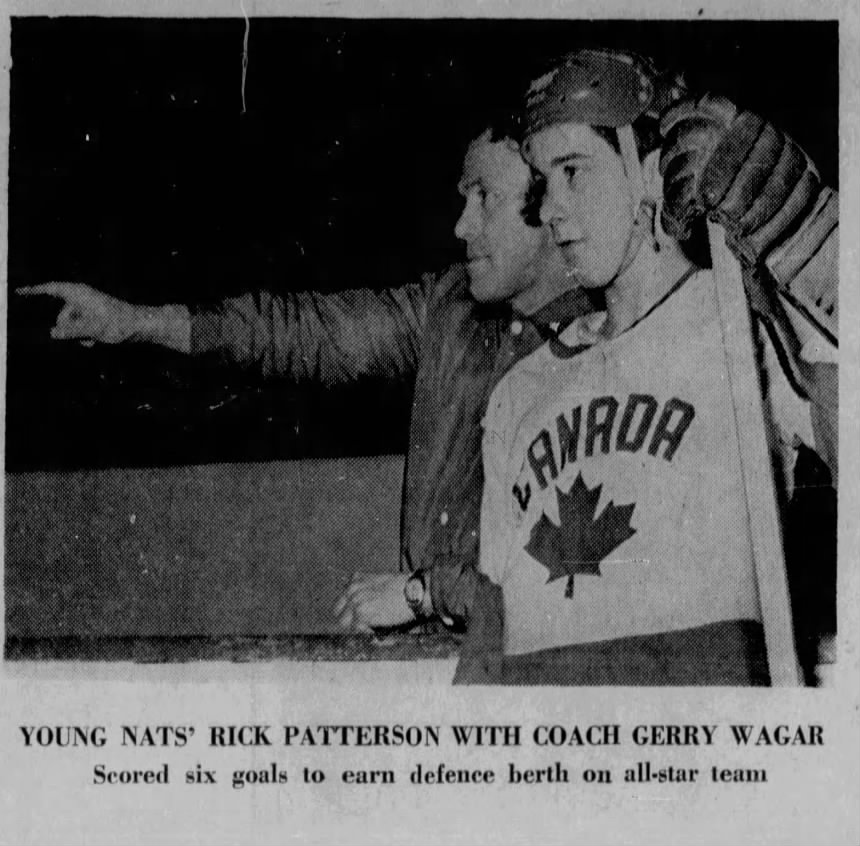
Coach Wagar called Paterson, “one of the finest Peewee players in Ontario,” he had two, three-goal games at the Silver Stick, including the semi-final game where Kingston clobbered Minnesota 9-0.
In the final against Detroit, 5,000 people filled the Port Huron rink, pulling for the Michigan team of course, but they couldn’t stop the Kingston tandem of Paterson and Linseman. Even as a young player, Linseman was at his best in the biggest games, Kenny scored twice in the final as Kingston dumped Detroit 5-1 to capture the North American title and go undefeated at the tournament, outscoring their opponents 21-3. Cam MacGregor, Torrance and Faulkner also scored for Kingston. Copeland continued his strong play in goal.
Paterson didn’t score in the final game, but years later he told me he would never forget it, “I played the entire sixty minutes. I tried to come off the ice once during the game, and Doc waved me back.” Meanwhile, Wagar marveled at Paterson’s play, telling the Whig Standard, ‘Rick is flawless at getting the puck out of our end, he never gives it away.” Wagar also had high praise for Linseman, “he’s simply deadly around the net.”
Paterson and Linseman were both named to the tournament all-star team. Linesman played on Kingston’s top line with Bill Jenkins, a great playmaker, and Faulkner, a speedster who could score also goals in bunches. Torrance centered the second line with Simurda and John Gurnsey. Mike Koresky had two 11-year-old rookies with him on the third line, Barry Wood and Kevin Taylor.
Paterson, the high scoring defenseman, anchored the Kingston blue line along with MacGregor, Peter Young, Roger Marshall, Brian Clancy and Reg Walton. Copeland played most of the minutes in goal backed up by Darrell Westcott.
After minor hockey, Paterson became a forward and in his final year of junior in Cornwall – he exploded for 58 goals and 138 points in 1977-78. Paterson was drafted in the third-round by Chicago at the 1978 NHL Entry Draft (Linseman went in the first round to Philadelphia & Simurda was a second round pick of the Flyers).
During his nine-year NHL career in Chicago, Paterson was a defensive forward and stalwart penalty killer. Paterson had more goals in his last year of junior in Cornwall than he did in his NHL career (he scored an even 50 career NHL goals), but played an important role on those Chicago teams.
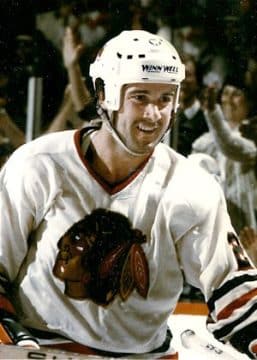
During his first six seasons in Chicago Paterson roomed with another well-known Kingston player – Bob Murray. Years later it was Murray that brought Paterson to Anaheim to be part of the 2007 Ducks Stanley Cup championship team. He didn’t get a ring in Chicago, but in the long history of Kingston puck chasers, Paterson is the only one to be part of four Stanley Cup winning teams.
Paterson is still involved with the game today as General Manager of the San Diego Gulls of the American Hockey League (Kingston’s Bob Ferguson is his assistant GM). After his playing days ended Paterson was an assistant coach and pro scout in the NHL, earning Stanley Cup rings with Pittsburgh (1991 & 1992), Tampa Bay (2004) and Anaheim (2007).
Paterson was inducted into the Kingston & District Sports Hall of Fame in 2012. I know because Paterson was flashing his four Stanley Cup rings at the podium – and I was the next guy up – inducted right after him. Paterson was a tough act to follow with his flashy rings, my hockey career began and ended in the Church Athletic League.
As for the Young Nats, they beat every top-ranked team during that memorable 1970-71 season. It’s tough enough to win an Ontario title, let alone a North American championship. To get through Ontario, the Young Nats beat the hometown Niagara Falls team in Western Ontario Final 5-2, then four days later had to go to Ottawa where they knocked off Nepean 3-1 to win the Eastern section title.
Three years later the core of the Kingston team went to the Wrigley Cup Canadian Midget finals, minus Paterson, at 15 he was already playing junior in Cornwall.
For Doc Wagar, Ken Linseman, Rick Paterson and company, the 1970-71 season for the Kingston Young Nats Peewee team was one for the ages. Perhaps the most dominant minor hockey team Kingston has seen in the long history of the Limestone City, the birthplace of hockey.
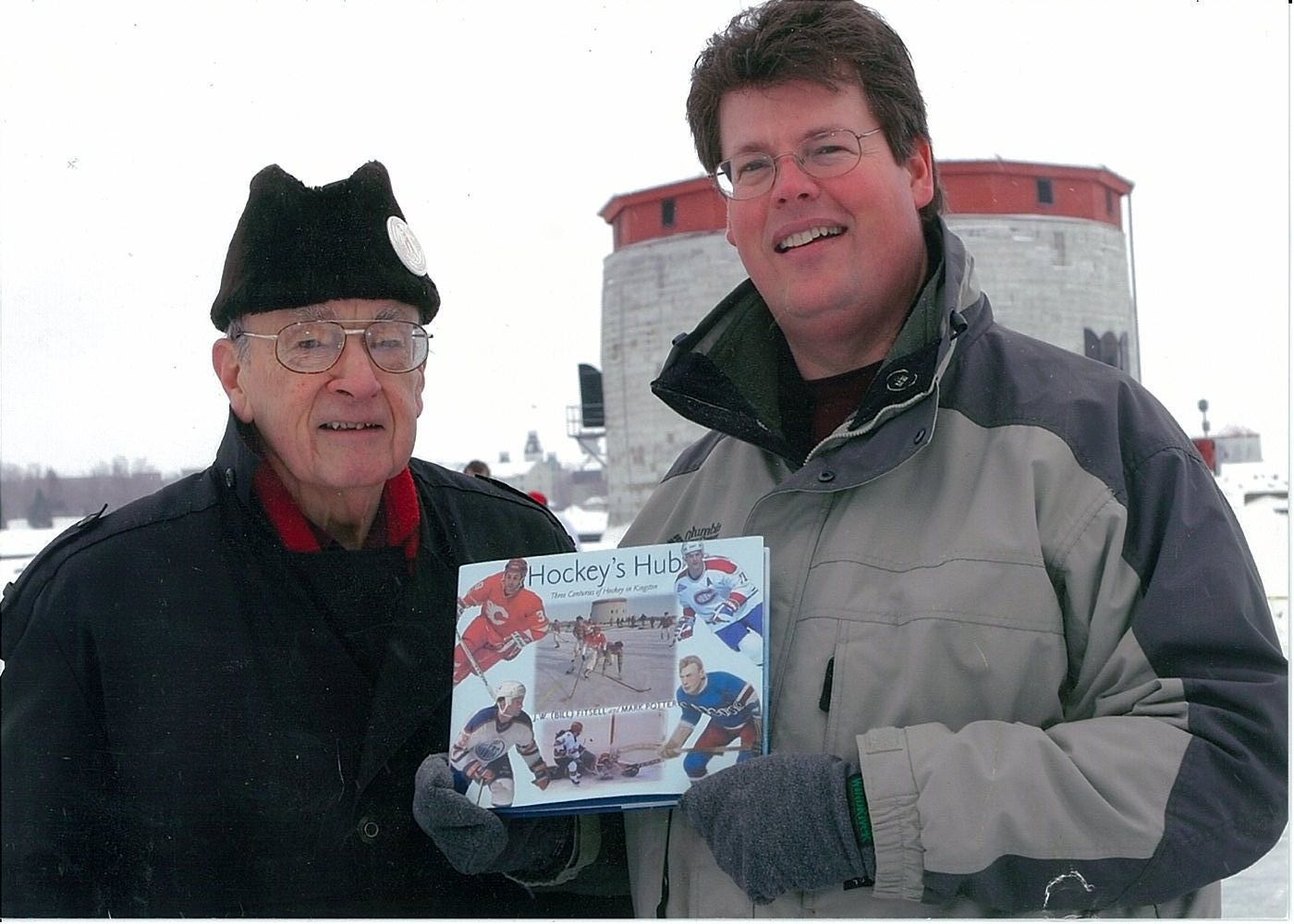
Mark Potter is a longtime Kingston broadcaster, co-author of ‘Hockey’s Hub – Three Centuries of Hockey in Kingston’ and an honoured member of the Kingston & District Sports Hall of Fame (2012).
 KTown Sports Blog