
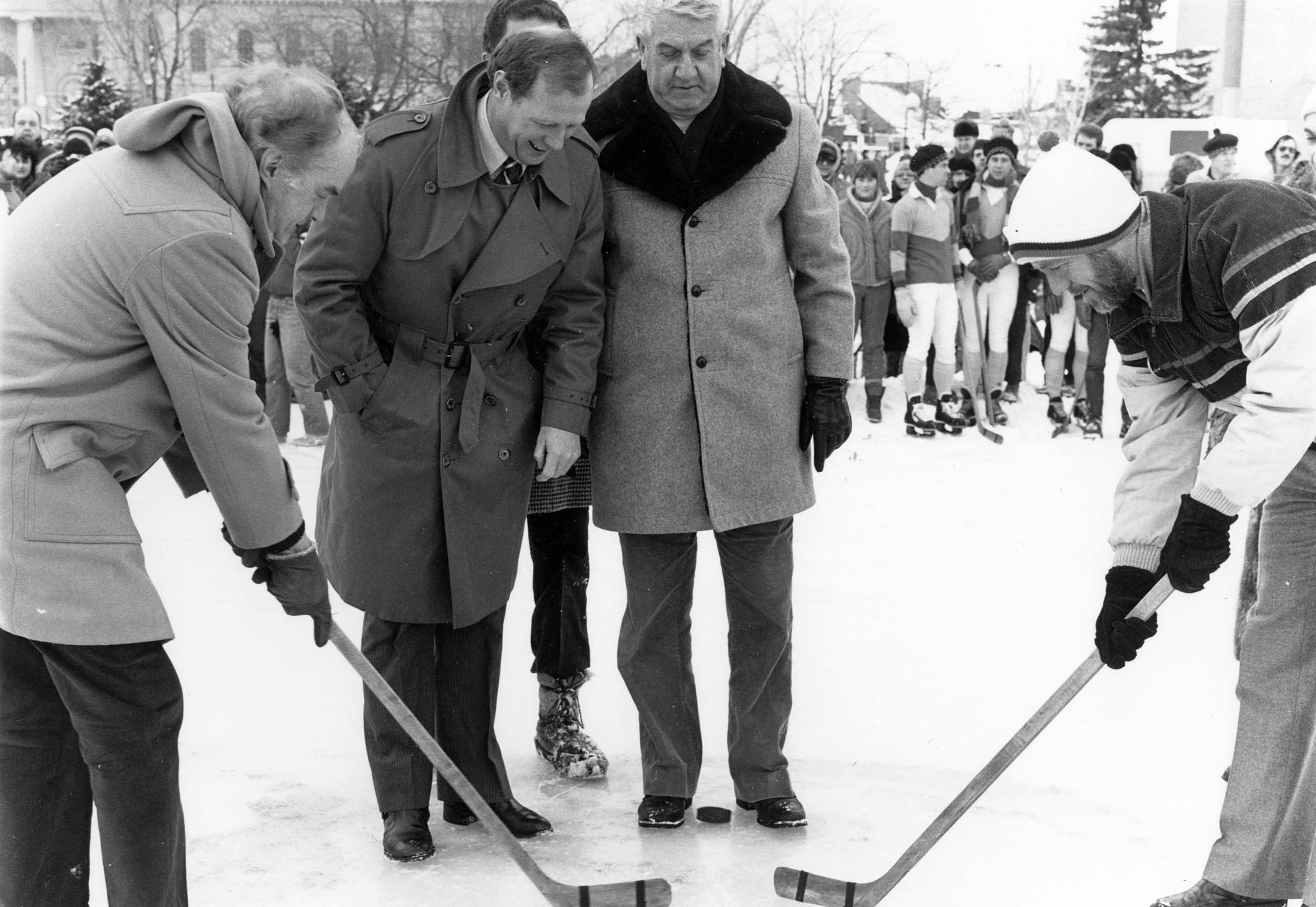
Dozens of players from Kingston have played in the National Hockey League, but only one made it as a referee. The late Art Casterton had a lengthy career as an official and was an NHL referee in the pre-expansion days prior to 1967.
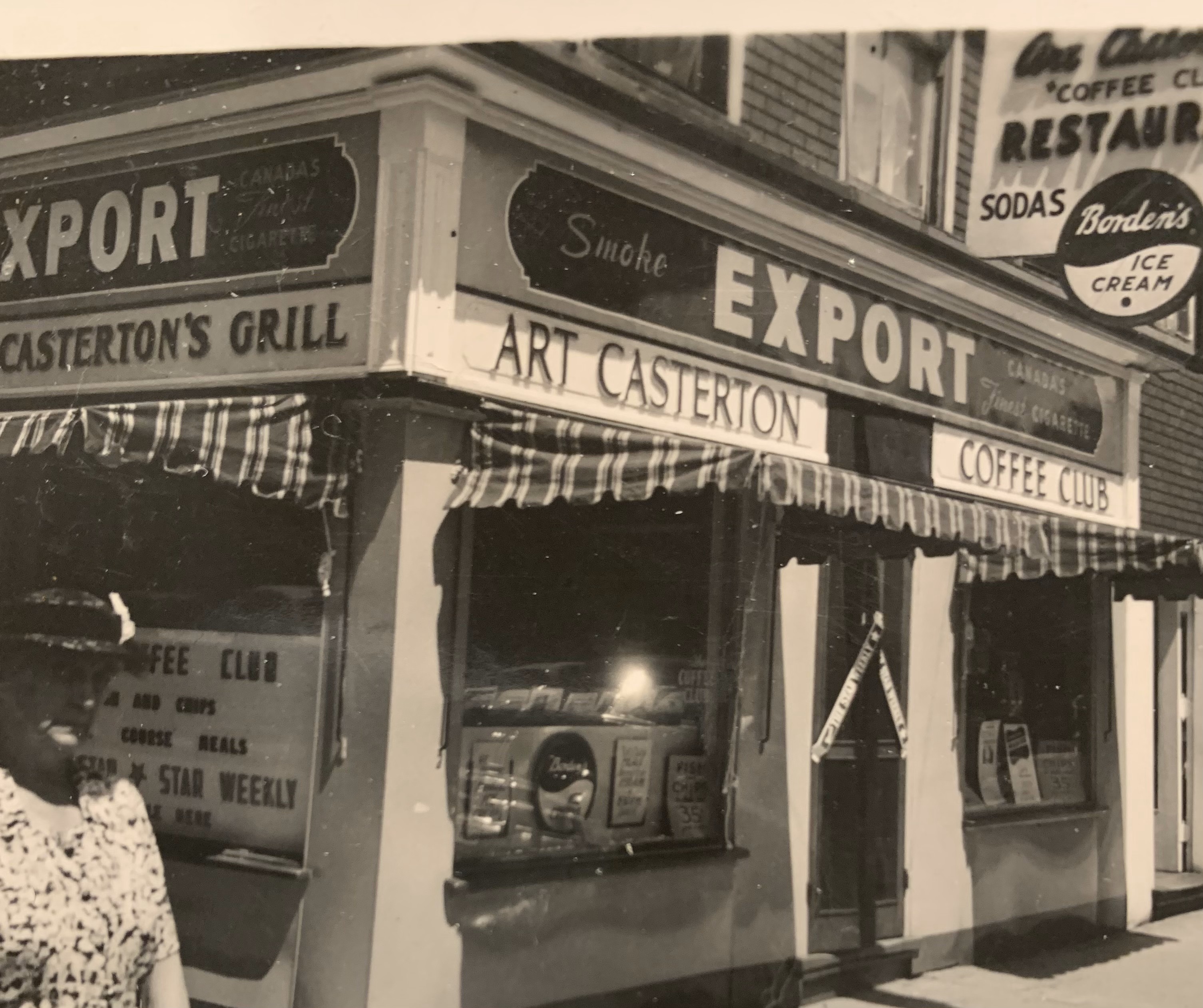
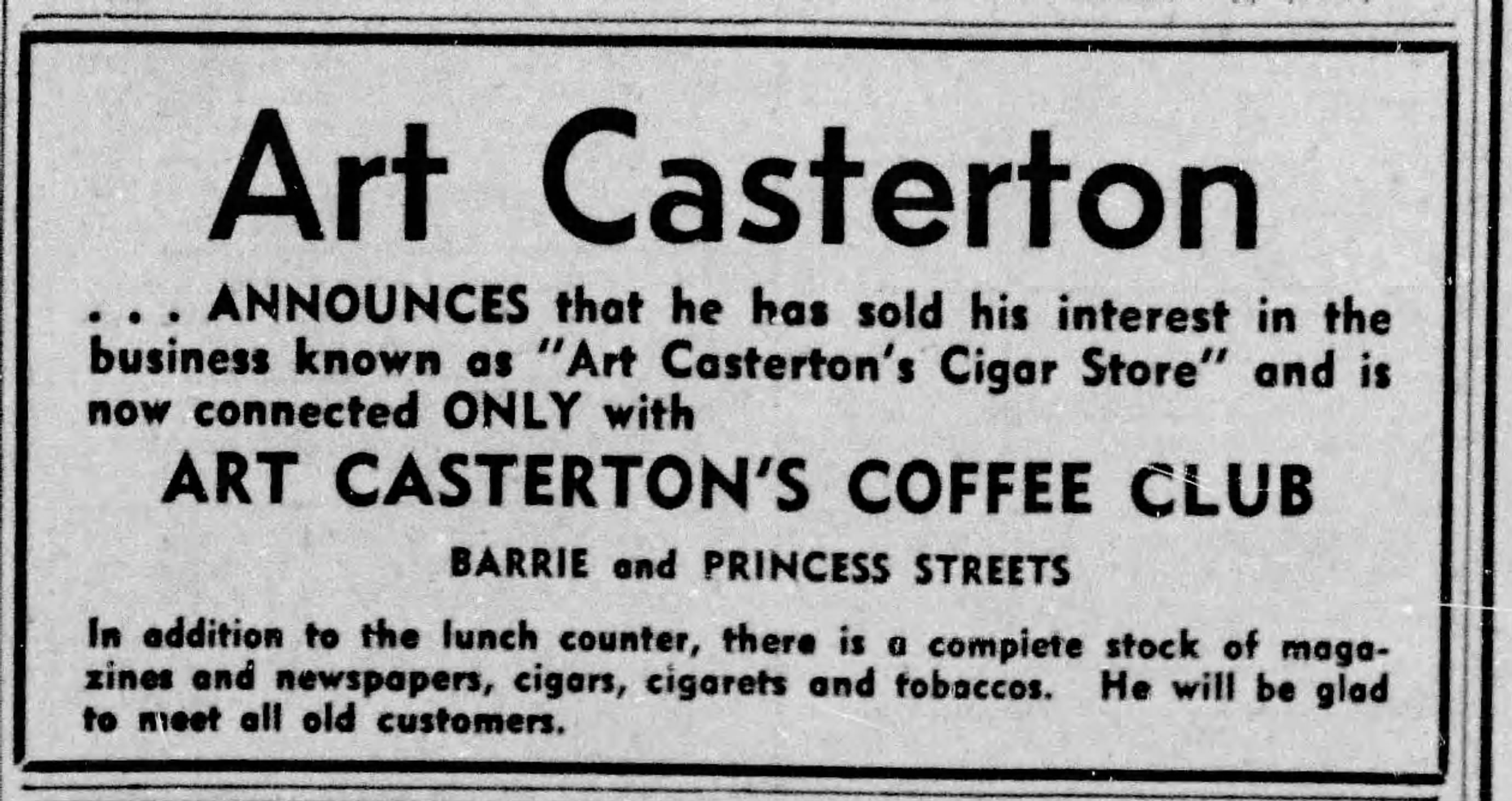
Born in Kingston in 1924, he served overseas during the Second World War and after the war returned home to the family business, Art Casterton’s Grill & Coffee Club at Princess & Barrie Streets. It was named after his father, Art Casterton Sr., who started the business and is best remembered as a long serving Kingston Alderman from 1936 until 1952. Art Sr. was also very involved in local sports, as an organizer and executive. Casterton Avenue in Calvin Park is named in his honour.
With a love of sports inherited from his Dad, Art Jr. was a good athlete playing competitive hockey and baseball in Kingston until he suffered a badly broken leg sliding into second base during a softball game at Victoria Park. At the urging of Lorne Cook, a long-time OHA executive from Kingston, Casterton turned to officiating. In those early days he was often paired with veteran officials Mike Rodden or Bill ‘Squeak’ Reason.
Rodden, a former NHL referee and Sports Editor of the Whig Standard, gave Casterton some valuable advice, “If you call what you see, the players will respect you. If you give a player a break, you are in trouble, treat every player the same.”
Casterton established himself as one of Canada’s top officials, calling games at the Allan Cup and Memorial Cup. He was also the General Manager of the Kingston Goodyears Senior B hockey team, including the 1955 championship team, and he was named Kingston’s ‘Sportsman of the Year’.
By 1959, Casterton was working minor pro games across three leagues; Eastern Professional Hockey League (EPHL), Central Hockey League, and American Hockey League. During EPHL games played at the Kingston Memorial Centre, his kids would run for coffee for their father between periods. The life of a minor league referee was not easy, during the long hockey season he would only have a couple of opportunities to get home and spend a few days with his family in Kingston. He logged thousands of miles between games travelling mostly by train, reading and rereading the official rule book that he described as, “my bible”
He needed some divine intervention one night in Quebec City. Casterton collided with a player after a penalty call and fell hard to the ice, smashing his head and suffering a very serious head injury. Rushed to a Quebec City hospital, his wife Dorothy learned of the incident that night while watching Max Jackson’s television sportscast on CKWS-TV. Thankfully, within a few weeks Casterton recovered and was back on the ice.

On October 03, 1962 Casterton was assigned his first NHL game at Chicago Stadium, one of the loudest rinks in the league. A very intimidating place for visiting teams, let alone an official working his first NHL game. But, no moment was too big for Art. Prior to the game, Bobby Hull skated by Casterton and asked, “How are things in Kingston Art?” Referee in Chief Carl Voss was in attendance and gave Casterton top marks on his NHL debut.
A couple of weeks later at the Detroit Olympia, he called an elbowing penalty on Gordie Howe (not the first elbowing penalty for #9), it was the game’s only penalty and on the way to the penalty box Howe said to Casterton, “Get the rookies, get the rookies.”
In the six-team era the NHL referees also had to work minor league games, with most refs making less than $10,000 a season (plus expenses). Casterton was part of an elite group of NHL referees, including Frank Udvari, Vern Buffey, Bill Friday & John Ashley. Udvari and Ashley are both honoured members of the Hockey Hall of Fame. Bill Friday became good friends with Casterton and would often visit his home in Kingston post NHL days.
The oldest Casterton son, Jim, remembers nights at Maple Leaf Gardens & the Montreal Forum getting into the dressing rooms for autographs. His Dad would also come home from road trips with a signed stick, or a puck with the official NHL crest & team logo.
With his wife and four kids back home in Kingston the years of travel had taken its toll, far too much time spent on the road and past his fortieth birthday, Casterton decided to retire prior to expansion in 1967. His relationship with Carl Voss wasn’t good either. Voss told his officials how to call a game and it didn’t sit well with Casterton.
His youngest son, Terry, remembers his Dad always saying, ‘If it’s a penalty in the first period, it’s a penalty in the third period and that’s the way I call it.”
When he returned home to Kingston following his NHL career he was still working amateur games and worked in sales for a couple years with Gooderham & Worts distillery. In 1973, at the age of forty-nine, he hung up his whistle for good, “The skaters were faster than I was, you can’t call a penalty deep in the zone when you are standing at the blue line,” he told the Whig Standard.
Casterton was recognized for his years of work as an official in 1985 in a special ceremony at the International Hockey Hall of Fame. Casterton and Belleville’s Vern Goyer were named to the OHA’s Referee’s Honour Roll of Achievement, for 25 years service as an OHA referee. At the time, only ten officials had received the honour.
One of the funniest moments of Casterton’s career involved future NHL’er Pat ‘Whitey’ Stapleton. As told by Whig Standard Sports Editor Ron Brown, it was a game between the EPHL Kingston Frontenacs and the Ottawa-Hull Canadiens. Casterton had ruled a face-off outside the Ottawa-Hull blue line, Frontenacs coach Wren Blair was adamant the puck drop should have been inside the line.
He sent Stapleton out to argue the call and after a minute or two jawing at each other, Casterton quipped, “Whitey, I saw you at Aunt Lucy’s the other night and you had more chicken in your basket than I did, so the faceoff is outside the blue line.” Stapleton cracked up, headed back to the bench while Blair went crazy, but the call stood. As a footnote, Stapleton and other Frontenacs players lived right across the street from Aunt Lucy’s at the Lucerna Hotel, Princess & Portsmouth Avenue.
Besides his work as a referee in the summer Casterton would umpire in Kingston’s top baseball and fastball leagues. The banter with players and fans didn’t change. After listening to a player argue a call Art would say, “Are you going for beer after the game,” to diffuse the situation.
Casterton worked for Corrections Canada in an administrative role for several years, then did a twenty-year stint at Bellevue House as groundskeeper and maintenance person. He always had a green thumb and loved spending hours in the gardens at Sir John A’s home before retiring in 1989.
A natural storyteller with a great sense of humour he was a popular guest speaker at banquets and sports dinners. As a WW2 veteran he was heavily involved at 560 Legion where he served as President. He was a driving force behind Legion Field, built in the mid-1990’s on Montreal Street for youth baseball.
Art also sat on the board of the International Hockey Hall of Fame and each winter he would referee the annual Historic Hockey Series played on Kingston harbour.
In 2006, Casterton passed away at age eighty-one. In a Whig Standard tribute to the long-time referee, friend and fellow referee Pat Hegarty said, ‘Art was a well-respected official, he had a good attitude, he would let them play but also knew when to be tough. Art had a real good read for the game.”
No higher praise for Kingston’s only referee to wear the stripes in the NHL.
Mark Potter is an honoured member of the Kingston & District Sports Hall of Fame, Past President of the Original Hockey Hall of Fame and forty-year Kingston broadcaster
 KTown Sports Blog
Great column! You mentioned some really good Kingston referees in it (e.g.Bill Reason, Pat Hagerty) as well as Art Casterton. All of them were good referees because they were essentially really good, sensible guys.
LikeLike